Cell Culture Plates with Embossed Nanofiber Surfaces
Give your cells defined physical cues beyond a flat culture surface. USF nanofiber plates let you explore how surface architecture influences cell organization, differentiation, and assay response using familiar cell-culture workflows.
Try USF Cell Culture Plates—Free.
We’re inviting research labs to test USF nanofiber culture surfaces and share their observations. Complimentary Tuning Plates and scientific support are available to qualified labs.
Explore How Cells Respond to Nanofiber Architecture
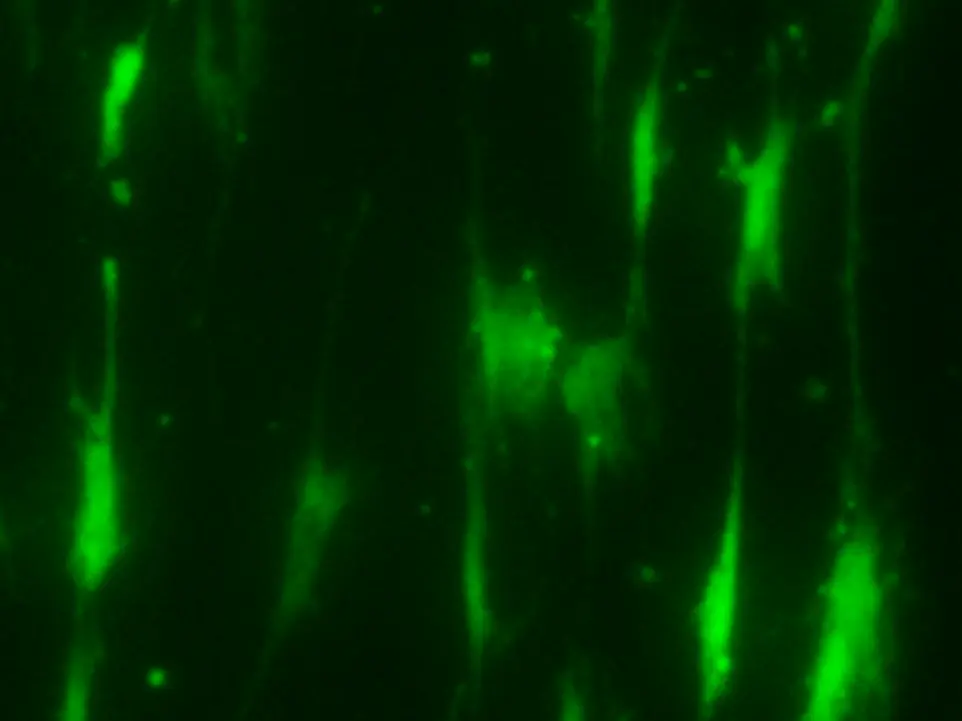
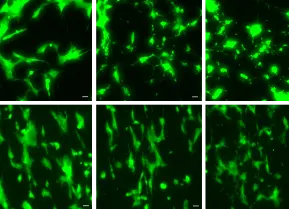
Cell Organization & Morphology
See how nanofiber architecture influences cell morphology, alignment, elongation, and spatial organization across different cell models.
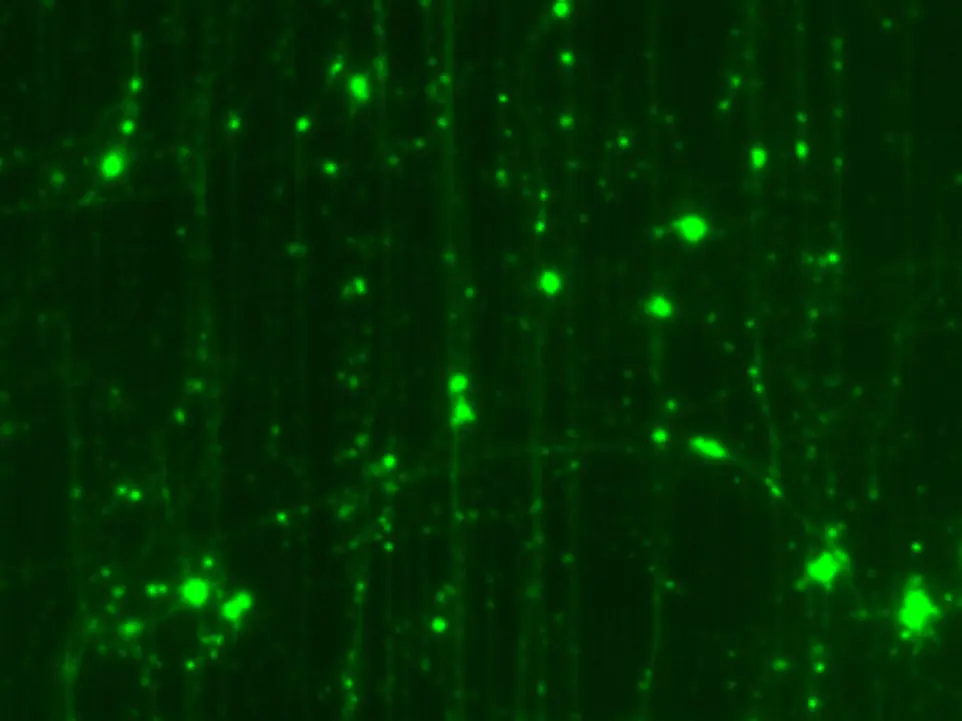
Neuronal Models
Explore how nanofiber density and patterning influence neuronal patterning, alignment, and axonal organization in iPSC-derived human cortical neurons.
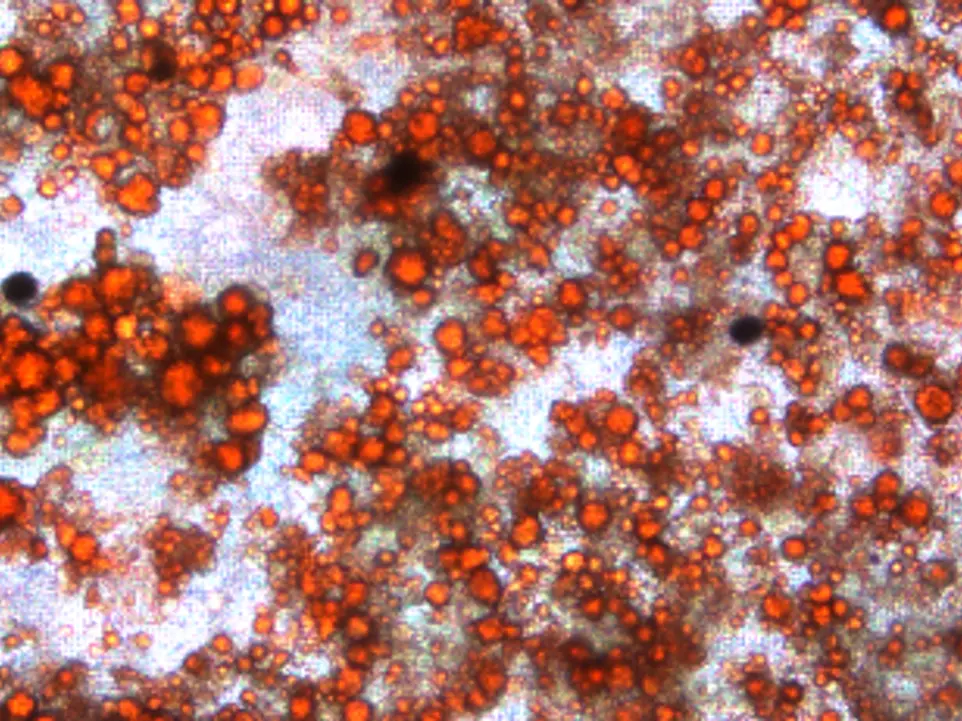
Stem Cell Fate & Differentiation
Explore how nanofiber biophysical cues influence cellular differentiation using existing protocols.
Drug Response
Compare drug response curves from standard 2D plates and USF nanofiber cell culture scaffolds.
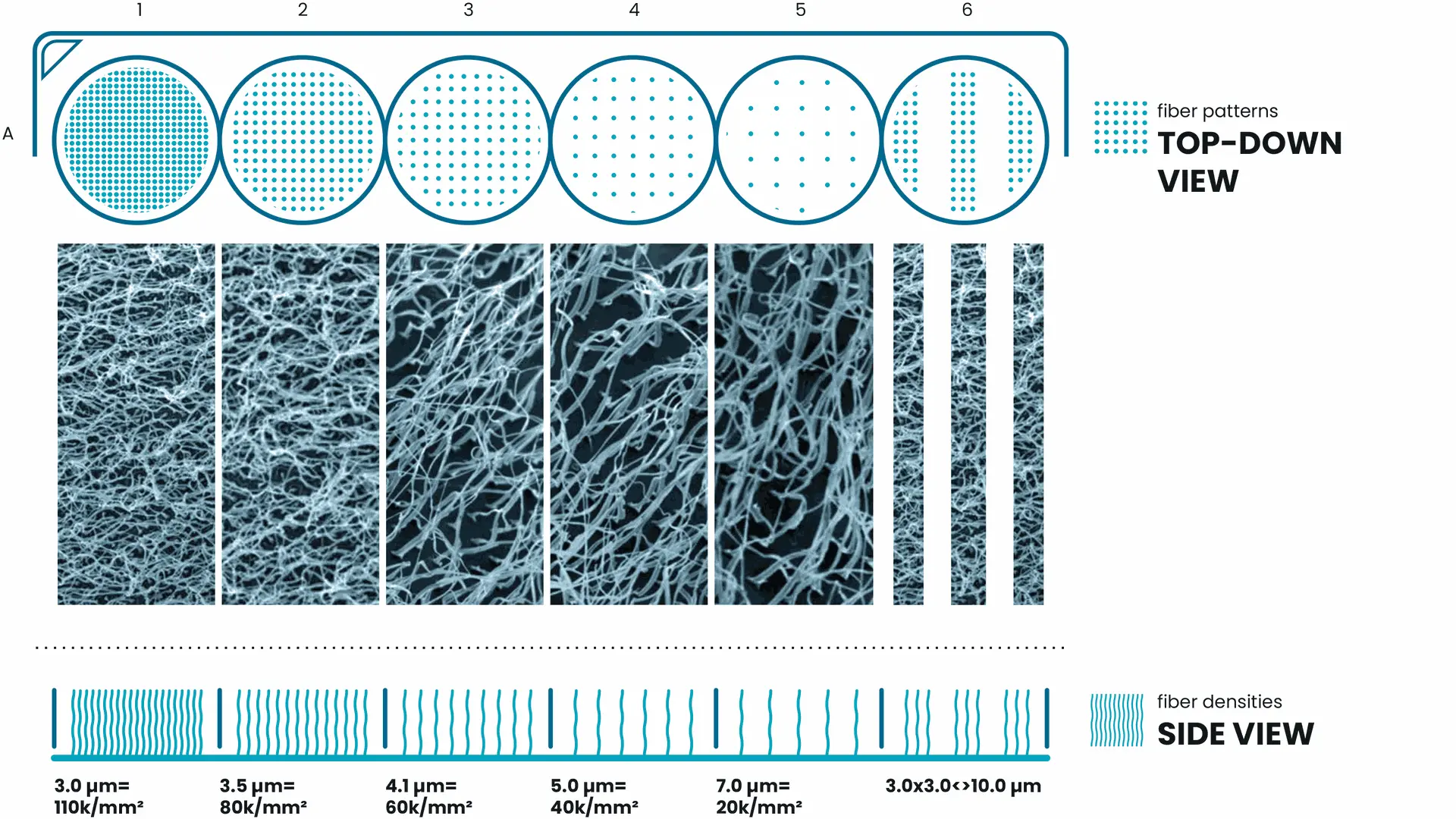
Screen Six Nanofiber Conditions in One 24-Well Plate
Not every cell model responds to the same nanofiber configuration. USF Tuning Plates provide six defined nanofiber conditions in a familiar 24-well format, helping researchers compare how physical architecture relates to the readouts that matter for their application.
Each condition is presented in a separate column with four replicate wells, allowing you to screen multiple fiber densities and patterns within a single experiment.
* Diagram intended for illustrative purposes only.
Technology
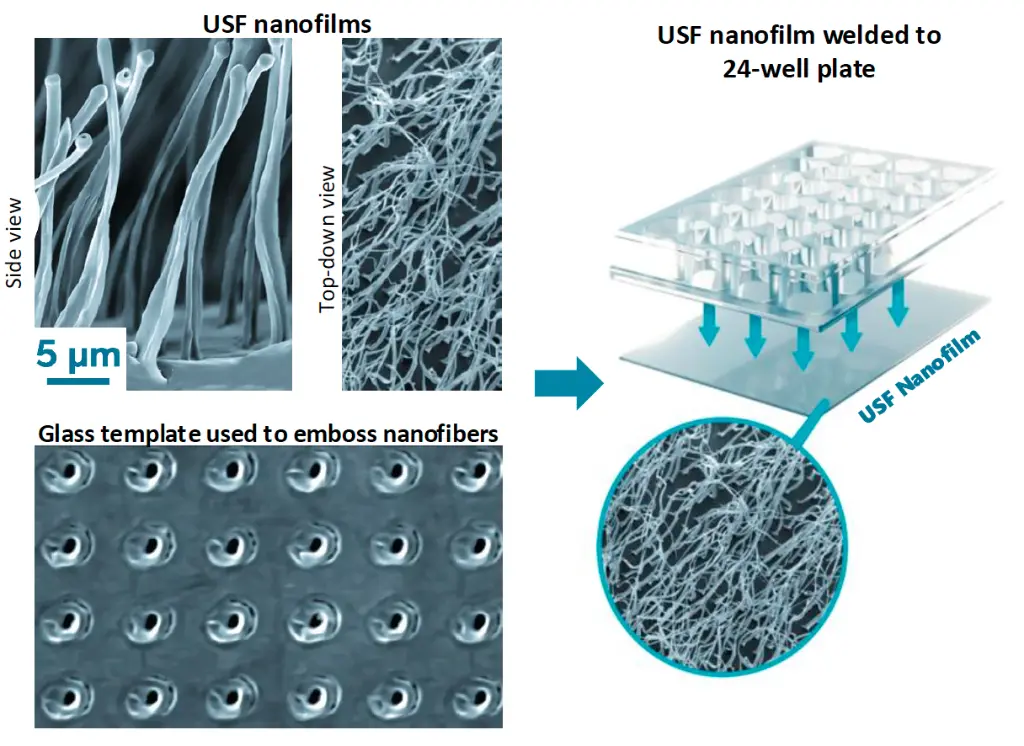
USF scaffolds are polymer films with nanofibers integrally attached to the surface. A reusable template defines the fiber spacing, density, and pattern.
The films are sealed beneath bottomless plates with standard well-plate dimensions, forming the culture surface at the bottom of each well.
The transparent, 125 µm polycarbonate support allows inverted microscopy directly in the plate.
Explore the Scientific Overview
USF nanofilms offer inherent advantages over current 3D scaffolds.
Biomimicry
Collagen-like fiber sizes, spacing, density, and orientation create more natural 3D microenvironments for cell culture. The open scaffold structure provides access to cells for nutrients and biochemical signals without requiring hydrogels.
Scalable Production & Versatile Formats
Batch production supports fast prototyping, small form factors, and custom lot sizes. Continuous production offers the potential for larger-scale manufacturing, including rolls wider than 30 cm. The technology can also be adapted to formats beyond well plates, including imaging dishes, T flasks, bioreactors, and parallel-flow devices.
Usability
USF nanofilms work with standard laboratory equipment and protocols and can be functionalized using familiar techniques, thin coatings, and reagents. Transparent well bottoms enable in situ imaging for live-cell observation. Plates can be stored at room temperature.
Tunability & Reproducibility
Precisely controlled fiber spacing, density, and patterns let researchers customize microenvironments for different cell types and applications. Defined architecture can reduce variability associated with the randomness of existing technologies.
Getting Started with Free Tuning Plates
Start with Free Tuning Plates
1. Request your plates.
2. Review preparation guidance and compare conditions using your cells and relevant readouts.
3. Discuss your observations and next configurations with USF.
Discuss Your Application
Have a specific cell model, experimental objective, or customization need? Connect with our team to discuss initial protocols, available configurations, and opportunities to adapt USF nanofilms to your application.
FAQs
The free set includes three Tuning Plates, each with six nanofiber conditions in a standard 24-well format. Shipping is free within the continental U.S.
Compare how different nanofiber densities and patterns relate to morphology, organization, differentiation, or assay response in your experimental system. Defined, reproducible physical architecture supports controlled comparisons; it does not guarantee reproducible biological results. Outcomes depend on the cell model, preparation, culture conditions, and readouts.
Explore our scientific overview for examples of cell models evaluated with USF nanofiber scaffolds. Evidence is specific to each model and experimental setup. Contact USF to discuss available data for your cell type and the conditions you would like to compare.
Plates are UV-treated and are not tissue-culture (TC) treated.
Visit USF Resources (protocols) for the Cell Plating Protocol and best-practice guidance. Review preparation and coating requirements before starting, and discuss adaptations for your cells and assay with USF.
Review the preparation guidance and plan which conditions, controls, and readouts you will compare. After evaluating the plates with your cells, discuss your observations and possible next configurations with USF. Contact the team with questions about your request or experimental setup.
Our nanofiber platform is designed to deliver both tunability and reproducibility, with continuous improvements being made and near-term priorities placed on the parameters that most strongly influence biological outcomes. Over time, we expect to provide highly tunable and reproducible control across all key structural parameters and to expand material options to enable application-specific control of properties such as stiffness, wettability, and cell adhesion, in a disciplined and application-driven manner.
We provide highly reproducible control of fiber spacing, density, and pattern, which are tunable by design and reproduced reliably within and across well plates. Fiber spacing can range from below 3 microns (approximately 110,000 fibers/mm²) to arbitrarily large spacings or custom patterns.
Fiber diameter is also highly consistent within a given configuration and from plate to plate. While diameter is not currently offered as a selectable parameter, the diameters used in our standard configurations fall within the central range commonly reported for natural collagen fibrils. Diameter tuning has been demonstrated and may be pursued through focused, application-driven partnerships.
Fiber height is not currently emphasized as a tuning parameter, as most applications are tolerant to variation across the range produced by our standard nanofiber configurations.
Yes, we have demonstrated the ability to control fiber stiffness by modifying fiber diameter and material. For now, we are providing PCL fibers in the couple hundred nm range with high reproducibility within and between plates.
Yes. A wide range of polymers have been used for nanofilm production, and others can be developed for future applications. Our technology is generally compatible with most thermoplastics and some thermosets.
No, hydrogels are unnecessary. Our collagen-like nanofibers already provide a superior 3D microenvironment.
Yes, USF nanofilms are compatible with common coatings, poly-amino acids, and proteins.
Yes. Our well plates are made to standard dimensions and are compatible with liquid handling systems, microplate readers, robotic systems, and other standard lab equipment.
Yes, cells can be viewed in situ through our optically clear well bottoms. The polycarbonate is equivalent to a #0 coverslip specifically for inverted microscopy.
Yes, our nanofibers are integrally and permanently attached to the underlying substrate. They are extremely difficult to remove, even with a razor blade. PCL fibers are bioabsorbable and may eventually degrade in vivo over weeks or months.
Yes, they can be stored at room temperature. While accelerated aging tests have not yet been conducted, we expect them to age similarly to standard 2D well plates.
Yes, other formats can be developed as needed. We will expand our offerings when there is sufficient demand.
Yes, our nanofiber scaffolds can be integrated into various formats, including imaging discs (available now), T flasks, petri dishes, bioreactors, and parallel flow devices. We can batch-produce or scale up with roll-to-roll methods, producing scaffolds in widths greater than 30 cm. We welcome partnerships to develop applications for different needs.
Yes. We are happy to discuss custom solutions, but we will need to prioritize based on complexity and potential impact. If you're interested in customization, contact us to arrange a discussion.